
Capturing stunning images while traveling requires more than just a camera. The right gadgets can transform your photography experience, ensuring you’re prepared for any situation, from breathtaking landscapes to candid street shots. This guide explores essential tools that empower photographers to document their adventures seamlessly, balancing portability with performance.
We’ll delve into the best camera gear, power solutions, supporting accessories, and software to optimize your travel photography workflow. Learn how to choose the perfect equipment, manage power and storage effectively, and utilize helpful apps to enhance your images and streamline your post-processing. Prepare to elevate your travel photography to new heights.
Essential Camera Gear for Traveling Photographers
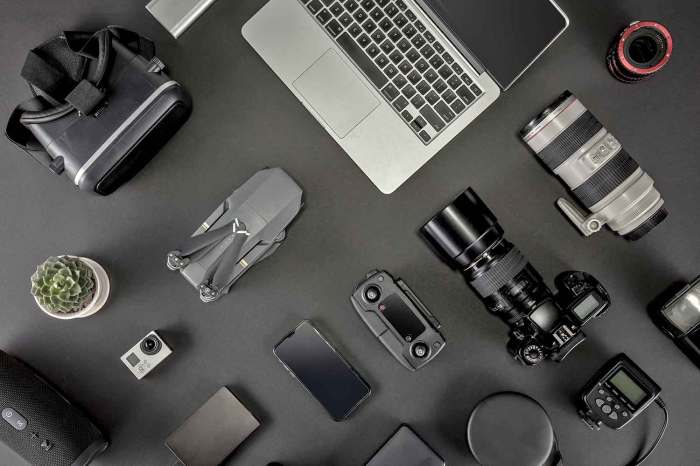
Choosing the right camera gear for travel photography is crucial for capturing stunning images while navigating diverse environments and situations. The ideal setup balances image quality, portability, and durability, catering to your specific travel style and photographic preferences. This section details essential camera bodies and lenses, along with a comparison of popular camera backpacks.
Top Three Must-Have Camera Bodies for Travel Photography
Selecting a camera body depends heavily on your travel style and photographic needs. Lightweight mirrorless cameras are ideal for backpacking, while more robust DSLRs might be preferred for luxury travel where weight is less of a concern. Here are three strong contenders:
- Sony a7C: This compact full-frame mirrorless camera offers excellent image quality and is remarkably lightweight, making it perfect for backpacking and longer treks. Its smaller size and weight come at a slight cost in terms of grip and button placement compared to larger models, but this is easily manageable.
- Canon EOS R6: A versatile full-frame mirrorless camera offering a good balance between image quality, speed, and features. It’s suitable for a wider range of travel styles, from backpacking (though it’s heavier than the a7C) to luxury travel where its robust build and advanced features are beneficial. The autofocus system is exceptionally reliable, a crucial asset for capturing fleeting moments.
- Nikon Z5: A full-frame mirrorless camera that strikes a balance between price and performance. It’s a good option for those who want a full-frame sensor without breaking the bank. While not as compact as the a7C, it’s still reasonably lightweight and manageable for most travel scenarios. The image quality is excellent, making it suitable for various photographic situations.
Five Essential Camera Lenses for Diverse Photographic Situations
A versatile lens kit is essential for travel photography. The following five lenses cover a broad range of shooting scenarios:
- Wide-angle lens (e.g., 16-35mm f/2.8): Ideal for landscapes, cityscapes, and architectural photography, capturing the grandeur of your surroundings. The wider field of view allows for more context in the image.
- Standard zoom lens (e.g., 24-70mm f/2.8): A versatile all-rounder suitable for a wide range of subjects, from portraits to street photography. Its focal length range covers many common photographic situations.
- Telephoto zoom lens (e.g., 70-200mm f/2.8): Perfect for wildlife photography, sports, and capturing distant subjects. The longer reach allows for detail shots without getting too close to the subject.
- Macro lens (e.g., 100mm f/2.8 macro): Excellent for close-up photography of flowers, insects, and small details. The high magnification reveals intricate textures and patterns often overlooked by the naked eye.
- Prime lens (e.g., 35mm f/1.4): Offers exceptional image quality and shallow depth of field, perfect for portraits and low-light photography. Its fixed focal length encourages creativity and thoughtful composition.
Comparison of Popular Travel-Friendly Camera Backpacks
Choosing the right backpack is crucial for comfortable and secure transport of your valuable equipment. Here’s a comparison of three popular options:
| Feature | Lowepro ProTactic BP 450 AW II | Peak Design Travel Backpack 45L | WANDRD PRVKE 31 |
|---|---|---|---|
| Capacity | Significant capacity for camera gear and personal items | Large capacity, suitable for extensive trips | Moderate capacity, ideal for shorter trips or minimalist approach |
| Portability | Comfortable for day trips, but can feel bulky for extended hikes | Comfortable and well-designed for travel, with various carrying options | Lightweight and compact, excellent for agility and movement |
| Protection | Excellent protection with customizable dividers and weatherproofing | Good protection with dedicated camera compartments and durable materials | Good protection, but potentially less robust than the other two |
Power and Storage Solutions
Power and storage are critical considerations for photographers on the move. The ability to capture stunning images is rendered useless without the means to both power your equipment and safeguard your valuable data. This section details essential power and storage solutions designed to keep you shooting and your memories secure, regardless of your location.
Portable Power Banks for Photographers
Portable power banks are indispensable for photographers, especially when shooting in remote locations or extended periods without access to wall outlets. Choosing the right power bank involves considering capacity and features. A higher milliampere-hour (mAh) rating translates to more charging cycles for your camera, extra batteries, and other devices. Essential features include multiple USB ports (to charge multiple devices simultaneously), fast charging capabilities, and robust build quality to withstand the rigors of travel.
For instance, a 20,000 mAh power bank could comfortably charge a mirrorless camera battery several times and a smartphone multiple times before needing a recharge itself. Look for power banks with USB-C Power Delivery (PD) for faster charging speeds.
Portable Hard Drives and SSDs for Photographers
Storing large volumes of high-resolution photography data requires reliable and fast storage solutions. Portable hard drives (HDDs) and solid-state drives (SSDs) offer distinct advantages. HDDs offer higher storage capacity at a lower cost per gigabyte, but they are slower and more susceptible to damage from drops or impacts. SSDs, on the other hand, are significantly faster, more durable, and more resistant to damage, though they typically offer less storage capacity for the same price.
For photographers, the speed advantage of SSDs often outweighs the cost, especially when working with large RAW files. Consider factors such as durability (shock resistance), data transfer speed (measured in MB/s or GB/s), and interface (USB 3.1 or Thunderbolt) when selecting a drive. A reliable external SSD with a minimum of 1TB capacity is recommended for most photographers.
Managing Power Consumption and Storage Space
Efficient management of power and storage is crucial for smooth photography workflows while traveling. To optimize power consumption, photographers should prioritize energy-efficient camera settings, minimize screen brightness, and utilize power-saving modes when not actively shooting. Regularly deleting unnecessary images and videos from camera memory cards is also vital. To manage storage space, consider using cloud storage services to back up images and videos regularly.
This ensures that your valuable photos are safe even if your physical storage device is lost or damaged. Employing non-destructive editing techniques also helps reduce file sizes. Furthermore, utilizing image compression techniques, like converting to JPEG from RAW, after final edits can significantly reduce storage space needed while still maintaining high-quality images.
Supporting Gadgets and Accessories
Traveling with photography equipment requires more than just the camera and lenses. A range of supporting gadgets and accessories significantly enhances the photographic experience, improves image quality, and protects your valuable gear from the rigors of travel. These additions streamline workflow and allow for greater creative control in diverse shooting environments.
Essential Supporting Gadgets for Enhanced Photography
Five specific gadgets significantly improve the travel photographer’s capabilities. These tools, while not always essential, offer considerable benefits in terms of image quality and ease of use.
- Tripods: A stable tripod is crucial for sharp images in low light or when using longer focal lengths. Its stability minimizes camera shake, leading to clearer photos and smoother videos. Consider a lightweight carbon fiber tripod for portability, especially when hiking or exploring remote locations. For example, the Manfrotto Befree is a popular choice for its compact size and robust build.
- Filters: Neutral Density (ND) filters reduce the amount of light entering the lens, allowing for slower shutter speeds or wider apertures in bright conditions. Polarizing filters reduce glare and reflections, enhancing color saturation and clarity. Graduated Neutral Density (GND) filters balance exposure in scenes with significant brightness differences, such as landscapes with bright skies and darker foregrounds.
- Cleaning Kit: A comprehensive cleaning kit is essential for maintaining lens and sensor cleanliness. Dust and smudges can drastically affect image quality. The kit should include lens cleaning pens, blower brushes, microfiber cloths, and sensor cleaning swabs. Regular cleaning prevents issues like sensor spots or lens scratches, saving time and potential repair costs.
- Remote Shutter Release: A remote shutter release, either wired or wireless, eliminates camera shake caused by pressing the shutter button directly. This is especially beneficial for long exposures, time-lapses, or self-portraits. Wireless remotes offer greater flexibility and convenience, allowing for remote triggering from a distance. For example, the Canon RC-6 wireless remote control is compatible with many Canon cameras.
- External Flash: An external flash provides more control over lighting than the built-in flash, allowing for creative lighting techniques such as fill-flash, bounce flash, or off-camera flash. This is particularly useful in low-light situations or for adding highlights and shadows to enhance depth and dimension in your photographs. For example, a Godox V860II-C is a popular and versatile option.
Protecting Your Photography Equipment During Travel
Safeguarding your valuable photography equipment during travel is paramount. The following accessories are crucial for ensuring your gear arrives at its destination undamaged.
- Hard-shell Cases: Hard-shell cases offer superior protection against impacts and shocks compared to soft cases. They are ideal for protecting fragile items such as lenses and cameras during air travel or rough handling. Consider cases with customizable foam inserts to perfectly fit your equipment.
- Camera Straps: A comfortable and secure camera strap prevents accidental drops and provides easy carrying. Choose a strap made from durable materials and consider features such as quick-release buckles for added security. For example, Peak Design straps are known for their quality and design.
- Rain Covers: Rain covers protect your camera and lenses from rain, snow, or dust. They are lightweight and easily packable, providing essential protection in unpredictable weather conditions. Look for waterproof and breathable materials.
- Lens Pen: A lens pen is a small, convenient tool for quickly removing dust and fingerprints from your lenses. It’s a vital part of maintaining lens cleanliness and image quality. Its retractable brush removes loose debris, and its carbon tip removes smudges without scratching the lens.
- Protective Filters: UV filters are inexpensive and can act as a protective layer for your lenses, shielding them from scratches, impacts, and dust. They’re always on the lens and easily replaced if damaged.
Software and Apps for Photographers
Post-processing your travel photos is crucial for enhancing their visual appeal and preserving memories. Fortunately, a range of powerful software and mobile apps are readily available, catering to different skill levels and editing preferences. Choosing the right tools can significantly improve your workflow and the overall quality of your travel photography.
Mobile Photo Editing Apps: A Comparison
Several mobile apps offer impressive photo editing capabilities, making on-the-go adjustments easy. This section compares three popular choices: Adobe Lightroom Mobile, Snapseed, and VSCO. These apps cater to various editing styles and user expertise, allowing photographers to select the best fit for their needs.
| Feature | Adobe Lightroom Mobile | Snapseed | VSCO |
|---|---|---|---|
| Ease of Use | Intuitive interface, suitable for beginners and professionals. | User-friendly with a well-organized layout, accessible to all skill levels. | Slightly steeper learning curve, but offers powerful tools for advanced editing. |
| Editing Capabilities | Comprehensive tools for adjustments, including tone curves, color grading, and lens corrections. Offers advanced features like masking and local adjustments. | Wide range of tools including healing, perspective correction, and selective adjustments. Known for its powerful healing brush. | Focuses on film-like presets and subtle adjustments. Offers a unique aesthetic and granular control over tones. |
| Suitability for Travel Photography | Excellent for batch processing and organizing large numbers of travel photos. Cloud syncing facilitates seamless workflow. | Ideal for quick edits and on-the-go adjustments. Its intuitive interface makes it perfect for rapid photo improvements during travel. | Perfect for creating a cohesive and stylistic look for travel photos, particularly those aiming for a vintage or film-like aesthetic. |
| Pricing | Subscription-based, with a free plan offering limited features. | Free to use, with optional in-app purchases. | Free to use, with optional in-app purchases for additional presets and tools. |
Benefits of Cloud Storage for Travel Photos
Cloud storage services, such as Google Photos, Dropbox, and iCloud, offer significant advantages for managing and accessing travel photos. These services provide secure backups, remote access, and efficient sharing capabilities, ensuring your valuable images are protected and easily accessible from anywhere.Storing your photos in the cloud offers several key benefits: automatic backups protect against device loss or damage; remote access allows you to view and share your photos from any device with an internet connection; efficient organization tools help you categorize and search for specific images; seamless sharing allows you to quickly send photos to friends and family.
For example, imagine accidentally dropping your phone while hiking—with cloud storage, your irreplaceable travel photos are safe.
GPS Tracking Apps and Geotagging
GPS tracking apps, often integrated into smartphone cameras or available as standalone applications, can significantly enhance travel photography through geotagging. Geotagging automatically embeds location data (latitude and longitude) into your images, allowing you to easily locate and organize your photos based on their shooting location. Furthermore, these apps can assist in location scouting by providing visual maps and identifying potential photographic opportunities.Many photography apps, such as Lightroom Mobile, offer built-in geotagging features.
Alternatively, dedicated GPS tracking apps can be used to record your journey and later overlay the location data onto your photos using photo management software. This allows you to create interactive maps of your travels, displaying your images directly on the map for easy browsing and recollection of your photographic journey. For instance, you could easily revisit your favourite spot from a trip to the Amalfi Coast by searching for photos tagged with that location.
Travel Planning and Resources for Photographers
Planning a photography-focused trip requires meticulous preparation to maximize your chances of capturing stunning images. This involves researching locations, creating a detailed itinerary, and packing the right gear. Leveraging online resources significantly aids in this process, ensuring a smooth and productive photographic journey.
Valuable Websites and Blogs for Travel Photographers
Several websites and blogs cater specifically to travel photographers, offering valuable insights and inspiration. These platforms provide resources ranging from destination guides to gear reviews and post-processing techniques. Accessing these resources is crucial for both planning and improving your travel photography.
- Digital Photography School: This blog offers a wealth of tutorials, reviews, and articles on various aspects of photography, including travel photography. Their travel photography section provides tips, techniques, and destination ideas, helping photographers improve their skills and plan effective trips.
- Light Stalking: Known for its in-depth tutorials and articles on photography techniques, Light Stalking also features travel photography content, often showcasing stunning images from around the world and offering practical advice on shooting in diverse environments.
- National Geographic Your Shot: While not exclusively a blog, National Geographic Your Shot is a powerful platform for travel photographers to showcase their work and discover inspiration. The community aspect allows for feedback and interaction, providing valuable learning opportunities.
- Fstoppers: Fstoppers is a comprehensive resource for photographers of all levels, providing tutorials, reviews, and articles on a wide range of topics, including travel photography. Their focus on professional techniques and gear makes it valuable for both beginners and experienced photographers.
- 500px: Primarily an image-sharing platform, 500px also serves as a significant source of inspiration for travel photographers. Browsing through the work of other photographers can provide ideas for destinations, compositions, and post-processing techniques.
Utilizing Travel Blogs and Guides for Photography-Friendly Locations
Travel blogs and guides can be effectively used to identify photography-friendly destinations and specific locations. By searching for s like “best photography locations in [country/region]” or “photography tours in [destination]”, photographers can uncover hidden gems and popular spots alike. Reading reviews and looking at photographs shared by other travelers helps assess the suitability of a location for photography.
Paying attention to details like lighting conditions, accessibility, and potential crowds is crucial for successful planning.
Step-by-Step Guide to Planning a Photography-Focused Trip
Planning a photography trip involves several key steps, from initial research to packing the right equipment. A structured approach ensures a smooth and productive journey.
- Research and Destination Selection: Identify potential destinations based on your photographic interests (e.g., landscapes, wildlife, street photography). Use online resources, travel blogs, and photography communities to research locations, considering factors such as weather, accessibility, and potential photographic opportunities.
- Itinerary Creation: Create a detailed itinerary, allocating sufficient time for photography at each location. Consider sunrise and sunset times, as these often provide the best lighting conditions. Factor in travel time between locations and allow for flexibility in case of unexpected delays.
- Gear Selection and Packing: Pack essential photography equipment, considering the specific needs of your trip. Organize your gear efficiently to prevent damage and streamline access. Remember to pack appropriate clothing and other essentials for your chosen destination.
- Pre-Trip Preparations: Obtain necessary permits or visas, make travel arrangements (flights, accommodation), and back up your photos regularly throughout the trip. Consider learning basic phrases in the local language to facilitate communication.
Essential Packing List for a Week-Long Photography Trip
| Category | Item | Quantity | Notes |
|---|---|---|---|
| Cameras | DSLR or Mirrorless Camera | 1-2 | Choose based on your needs and preferences |
| Lenses | Wide-angle lens, telephoto lens | 2-3 | Select lenses suitable for your intended subjects |
| Accessories | Extra batteries, memory cards, cleaning kit | Multiple | Ensure sufficient power and storage |
| Other | Portable charger, tripod, backpack | 1 each | Essential for convenience and gear protection |
| Clothing | Weather-appropriate clothing | As needed | Consider layering for changing conditions |
| Documents | Passport, visa, flight/hotel confirmations | 1 each | Ensure all documents are readily accessible |
Ultimately, successful travel photography hinges on preparation and the right tools. By equipping yourself with the essential gadgets and employing smart strategies for power management and data storage, you can focus on capturing unforgettable moments without technical distractions. Embrace the adventure, and let your photography tell your story.
Essential FAQs
What’s the best way to protect my camera gear during travel?
Invest in a high-quality camera backpack with ample padding and weather protection. Consider using individual protective cases for lenses and other delicate items. A rain cover is also essential.
How can I prevent my camera battery from dying during a long day of shooting?
Carry a portable power bank with sufficient capacity to recharge your camera battery multiple times. Consider extra batteries as a backup.
Which cloud storage service is best for travel photographers?
Several services offer excellent options, including Google Photos, Dropbox, and Adobe Creative Cloud. Choose one that meets your storage needs and budget. Consider features like automatic backups and offline access.
What are some tips for finding affordable travel photography opportunities?
Travel during the off-season, consider less popular destinations, look for budget-friendly accommodations, and take advantage of travel deals and discounts. Prioritize experiences over luxury.


